Saturday, August 11, 2007

For the second time of asking: "Should I eat the chicken?"

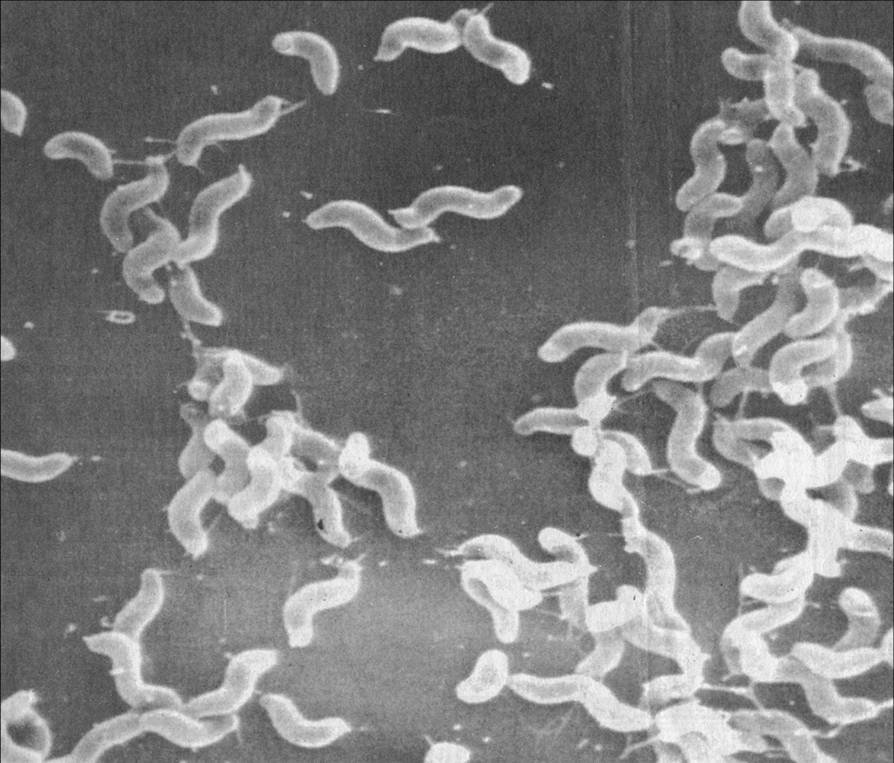
Over the last eight months we have heard a lot in New Zealand about the dangers of Campylobacter and poultry. Some of it has been well-informed and some has been blatant scaremongering that served only to confuse and frighten the consumers. The poultry industry was accused of producing New Zealand’s cheap and dirty food. Ad hoc solutions were advanced that would in all probability increase the cost of poultry in the market place without giving any guarantee that the rate of Campylobacter infection in the population would decrease.


The still small voice of reason is now being heard and concrete steps are being taken to understand and reduce the problem, which is not unique to New Zealand*. The New Zealand Food Safety Authority is studying possible control measures. Researchers at Massey University are examining isolates from the environment and from patients, building a comprehensive database on Campylobacter strains that can be used in epidemiological studies. The first version of the Poultry Industry Association of New Zealand Broiler Growing Biosecurity Manual has now been released. This is a comprehensive manual of approved procedures aimed at controlling infection and spread of Campylobacter in poultry flocks. When fully implemented, the procedures should greatly reduce the incidence of Campylobacter in poultry in the market place. The production of the manual is a creditable response of the PIANZ to the concerns expressed by scientists, politicians and the general public.


So does that mean that campylobacteriosis in New Zealand is under control? I don’t think so. I believe that it is highly unlikely that Campylobacter can be eradicated in poultry, at least in the short term. There are also other sources of the bacteria in our food supply and in the environment. Only a couple of weeks ago, a number of mountain bikers taking part in a contest became ill with campylobacteriosis. No food source could be identified as the source; infected surface water and mud, which had covered the competitors as they splashed through the puddles, was blamed as the source.

Distributors, wholesalers and retailers, together with the consumers themselves, must take some responsibility for the safety of food. Even though campylobacteriosis has been shown to be linked with consumption of undercooked barbecued chicken, I am not convinced that New Zealand’s high incidence of the disease can be attributed entirely to this cause. There are many routes of infection for the consumer. Leaking packages in display cabinets can contaminate other food purchases, the hands of customers and the handles of supermarket trolleys. Cross contamination in the restaurant or domestic kitchen via utensils and chopping boards may result in salads or other uncooked dishes becoming infected. The dose of bacteria required to initiate the illness in humans may be only a few dozen cells. This means that commercial and domestic food handlers must be properly educated in practical food hygiene and food safety. We can all contribute to the safety of our food.


Should we eat the chicken? You bet!


* Work conducted in Hong Kong by my team showed that between 50 and 60% of fresh chicken was contaminated with Campylobacter. This dropped to about 30% if the poultry had been frozen. These rates of contamination are entirely consistent with figures reported for other countries.

Wednesday, July 18, 2007

Coliforms and Faecal Contamination

I recently read a newspaper article about the potential contamination of ground water from failing septic tanks. Sanitarians had found septic tank systems close to a restaurant that might be feeding human faecal matter to the ground water. However, wells in the surrounding area, both up and downstream of the potentially contaminated site tested negative for Escherichia coli. The significance of this finding is that the sanitarians could not demonstrate that the wells were in fact contaminated by human faeces or the outflow from the septic tanks.

Escherichia coli is a bacterium found in the intestines of man and animals, but it doesn’t grow in water and doesn’t grow well in the environment. So if it is found in water, the implication is that the water has been contaminated with faecal material. Some strains of E. coli, such as O157:H7, cause serious disease, though most do not. The micro-organism is used as a Faecal Indicator. The importance of finding any E. coli in water or food is that other enteric pathogens, such as Salmonella or Norovirus, might be present.

The article went on to say that 28% of the wells tested did contain “coliforms” and this indicated that the water system was at risk of more serious contamination. This is probably correct, because a properly constructed well should draw water from deep in the ground; such water has often been in the ground for hundreds of years and has been filtered through the soil and should have a low bacterial count. Though the article was correct, it may have caused some confusion in the mind of the reader.

The finding of coliforms in water is not necessarily indicative of danger. The coliform group is defined by the tests* that we use, i.e. “coliform” is not a species, it simply says that these organisms give us a positive result in the tests we apply. This means that some bacteria are included in the group that have no faecal connotation at all. These bacteria may be found in plant material that has never come in contact with faeces of man or animals and the bacteria may even be transmitted in the seeds of the plants. So if we find coliforms in the water or in food, it is not a cause for immediate panic. Obviously, if we find large numbers present, we should look to find out why. The well may be affected by inward leakage of surface water; fresh salad vegetables may have these micro-organisms present at low numbers on their tissues, but high numbers suggest poor kitchen hygiene or temperature abuse.

If we wish to demonstrate that contamination by faeces has occurred, we need to do further tests on the bacteria to see if they are actually E. coli. The tests involve different culture media, different incubation temperatures and biochemical tests.

*The tests that we use to detect coliforms vary somewhat between countries. The tests are based on the ability of coliforms to grow in the gut, so they must be able to grow in the presence of bile salts. Bile salts are secreted into the intestine to aid in digestion of fats; they are natural detergents. So some media formulations include bile salts, while others employ synthetic detergents. The media also contain lactose as a carbon and energy source for the bacteria and the tests are incubated at the optimum temperature for the growth of the target organisms. So the coliform group is defined by their ability to produce a positive result:
Acid and gas production in 24 to 48 hours from lactose at 37C in the presence of bile salts.

If we wish to demonstrate that Escherichia coli is present, then we may subculture into a similar medium containing selective agents (which prevent other similar micro-organisms from growing) and raise the temperature to 44.5C and again look for gas production. At the same time we may look for the ability of the micro-organisms to convert tryptophan to indole; produce sufficient acid to change the colour of methyl red pH indicator; produce acetoin from glucose and grow on citrate as the sole carbon and energy source. This series of tests is known as the IMViC tests. E. coli normally gives a "++--" profile. Finally, we may grow the culture on Eosin Methylene Blue agar and look for the formation of a metallic green sheen. If all these tests give the correct result, we can be pretty sure that E. coli is present and faecal contamination has occurred.

Sunday, June 3, 2007

Free Choice or Safety of the Population?

Governments and regulators are always in a difficult position. Do they allow total freedom of choice, or does their responsibility to the population require them to make restrictive decisions based on the greater good of the people? The government then performs a balancing act, running the risk of being labelled as Big Brother (or at least Nanny Government) or as being irresponsible. For example, should we all be allowed to use any chemical we can obtain to relieve the monotony of our daily lives, or should there be regulations to control the use of mind-altering substances and thus protect us from ourselves? If we allow unfettered use of any substance and thus maintain personal freedom, how do we protect the innocent - those who are too young or too poorly educated to know that these materials may be harmful?

Most people would probably come down on the side of some restrictions for the use of drugs, though some would argue for freedom of choice. The same applies to the sale and consumption of raw milk and raw milk products.

I have discussed raw milk before in this blog. I might have left it at that, but the New Zealand Government, in the form of the New Zealand Food Safety Authority has now called for submissions on a proposal to permit direct imports of Roquefort, a soft raw milk cheese made in France, and extra hard Parmesan-style raw milk cheeses Grana Padano, Pamigiano Reggiano, Romano, Asiago and Montasio. An extensive programme of risk assessment has already been undertaken and the Authority is now consulting with industry groups.

This development may lead some members of the community to believe that Big Brother has been wrong all along and is now backing down. Extra hard cheeses have a low water activity* of about 0.693 that prevents the growth of most bacteria. Soft cheeses, such as Brie, Camembert and Roquefort have much higher water activities and thus may permit the growth of pathogens such as Listeria monocytogenes (see post To Pasteurize or not? - 10th December 2006). The truth is that cheeses made from raw milk are not as safe as those made with pasteurized milk.

European Community (EC) legislation sets microbiological, food safety and process hygiene criteria that reduce the risks in consumption of raw milk cheeses. NZFSA has recommended that if these products are to be directly imported and ultimately manufactured in New Zealand, additional risk mitigation measures should be introduced:

• 100% verification of certificates attesting that the relevant EC standards have been met

• continuing monitoring of products to check for E. coli levels, which can indicate unsafe manufacturing conditions leading to faecal contamination of the cheese.

It is expected that leaflets, posters and point of sale brochures will be required to educate the consumers on the risks of eating cheeses made from unpasteurized milk and that labelling of the products will be mandatory. Yet another acronym has been added to our lexicon: YOPI - Young, Old, Pregnant or Immunocompromised. This group of the population should not consume raw milk products.

*Water activity is a measure of the ability of water to take part in biological and chemical reactions. It is measured as a ratio of the partial vapour pressure of the food to that of pure water. That sounds complicated, (it's not) but it results in a scale of water activity running from 0 to 1. Generally speaking, the lower the water activity, the harder it is for micro-organisms to grow. Water activity in foods can be controlled by salts and sugars. So we can formulate food to have a particular water activity and thus preserve the food.

Sunday, March 18, 2007

Yet more on unpasteurized milk

This post was updated on 30th April, 2007.

In the previous post I mentioned the potential for contraction or spread of disease that could result from the consumption of raw milk or products made from unpasteurized milk. In that case the consumers may have contracted salmonellosis from the milk.

This week the Grey Bruce Health Unit in Ontario, Canada, issued a press statement, warning pregnant women to avoid consumption of raw milk and unpasteurized dairy products. The warning was issued to help prevent listeriosis infection in newborn babies. The original release can be found at:
http://www.publichealthgreybruce.on.ca/HOME/NewsEvents/2007/Mar/2006Mar14_Infant-Listeriosis.htm

Non-pregnant humans are highly resistant to the infection, though if they do become infected, the symptoms can be very serious, including meningitis and sepsis (invasion of the blood or tissues by bacteria or their toxins). Pregnant women may contract Listeriosis, but show no serious symptoms beyond mild influenza-like signs. Their foetus, however, may be infected, resulting in abortion or stillbirth. If the infant is infected during delivery, symptoms of meningitis begin 1 to 4 weeks later.

The Grey Bruce Health Unit news release stated that it had received a laboratory-confirmed report of an infant who contracted the disease. The most likely source of infection was said to be the mother’s consumption of raw milk cheese.

The release went on to say that pregnant women are at a 17 times higher risk than the general population of contracting the disease.

My personal and professional opinion is that any perceived benefits of drinking raw milk are far outweighed by the risks, both to the individual and to others in the same household. This is supported by scientific evidence: In the last decade the Center for Disease Control and Prevention has documented more than a thousand cases of food-borne illness and two deaths, all caused by unpasteurized dairy products. I have advised my pregnant daughter-in-law to avoid raw milk and raw milk products.

Sunday, March 4, 2007

More on unpasteurized milk

The arguments about the desirability or otherwise of drinking unpasteurized milk continue. It seems that its proponents will hear nothing said against the practice; many scientists and doctors provide comment, often supported by case studies, that suggest that there are significant and serious risks associated with drinking unpasteurized milk.

The following report was posted recently on the Food Safety Network mailing list on behalf of Doug Powell of Kansas State University:
Begins
http://www.wdbj7.com/Global/story.asp?S=6170552&nav=S6aK
WDBJ7 News
HARRISBURG, Pa. -- The Pennsylvania Health Department is, according to this story, warning consumers not to drink raw milk from a York County dairy farm after confirming that two people who drank it last month were sickened by salmonella.Health Secretary Calvin Johnson was cited as saying the state Agriculture Department has also obtained three samples from Stump Acres Dairy in New Salem that tested positive for salmonella.
Ends

Of course, the facts that two consumers of the product contracted salmonellosis and that samples taken from the dairy tested positive do not prove that the unpasteurized milk was the source, though detection of the same serotype in patients and the milk would be very strong evidence. However, the correlation between raw milk consumption and illness is hard to ignore.

There are sometimes suggestions that the pasteurization process is too severe. The process was originally designed to eliminate Salmonella, but was later modified to be slightly more rigorous to ensure that Coxiella burnetti (a rickettsia-like organism which is the cause of Q-fever - a febrile disease of man and which sometimes has serious sequellae), was eliminated. There is currently some investigation of the time/temperature relationships in milk pasteurization to see if there is a possibility of making the process less severe.

Sunday, December 10, 2006

To pasteurize or not?

Over the past few weeks the issue of milk pasteurization has exercised the people and government of Ontario.

The argument is not a new one: some people believe that the practice of milk pasteurization destroys the nutritional characteristics of the milk and reduces its value as a food. The official line is that the sale (or even giving) of raw milk to the public is illegal, though it is permitted with varying restrictions in 28 states in the USA. Pasteurization of milk has been mandatory in Ontario since 1938. Earlier, around 1900, over 10% of all childhood tuberculosis was thought to be caused by unpasteurized milk. The rate of tuberculosis infection and many other milk-borne diseases in children fell dramatically after the law enactment and was hailed as a major achievement.

To understand the reasons given for pasteurization, we need to go back to the source of milk. Most of our milk supply comes from cows, though goats and sheep are also milked commercially. All of these animals carry bacteria in their intestines and on their skin and feet. They may also carry viruses internally. Some of these micro-organisms can infect humans, occasionally with very serious consequences. Examples are Listeria monocytogenes, Salmonella, Campylobacter, Mycobacterium tuberculosis, Eschericia coli, Brucella and Staphylococcus aureus.

Inside the udder of a healthy animal, the milk is essentially sterile. However, even in a well-run milking shed, it is very difficult to prevent some contamination of the milk from the exterior of the udder. A quick check of the filters will often show a small amount of dirt or fibrous material that has originated either in the gut or on the hide of the cow. Bacteria are too small to be seen with the naked eye, but will be present in the material in the filter and the milk stream. We have to accept that raw milk will contain bacteria and possibly faecal viruses.

All of these micro-oganisms are destroyed by heating the milk to 72C for 15 seconds.

Proponents of raw milk consumption (and the manufacture of cheeses etc. from unpasteurized milk) claim that pasteurization also destroys enzymes in the milk that aid in digestion of the product; the cheeses have less flavour and are inferior compared with their unpasteurized counterparts. I don't intend to get into a debate in this post about nutrition - I am not a nutritionist. So, I will list the effects of just some of these micro-organisms on the human body and leave you, the reader, to do your own nutritional research.

Listeria monocytogenes rarely affects healthy adults; those at high risk include pregnant women, newborn infants, the elderly, and those with weak immune systems. The Centers for Disease Control and Prevention (CDC) estimate that 2,500 people become seriously ill each year in the United States and among these, 500 will die. According to research, pregnant women account for 27% of these cases. CDC claims that pregnant women are 20 times more likely to become infected than non-pregnant healthy adults. Babies may be stillborn or infected at birth. Refrigeration will not stop this micro-oganism from growing, though its growth rate will slow.

Salmonella causes abdominal cramps, diarrhoea, vomiting, headache and elevated temperature when the bacterial cells invade the mucosal cells of the gut. The acute symptoms usually last for only one to two days, though some patients show a much longer illness. Chronic consequences may include arthritic symptoms developing some 3-4 weeks later. Obviously, during the diarrhoeal phase, contamination of the environment and thus other family members can occur.

Campylobacter jejuni is now regarded as the leading cause of gastrointestinal illness in many countries. See earlier posting "So what is this Campylobacter thing?"

Mycobacterium tuberculosis is probably a human-specialised form of M. bovis, which was probably passed to humans from cattle when milk consumption began. There is archaeological evidence that this occurred between 4000 and 8000 years ago and then spread through the migrations of Indo-Europeans throughout the world ( www-micro.msb.le.ac.uk). The normal transfer route is through droplets released during coughing, but tuberculosis can also be transmitted in foods, including unpasteurized milk. If M. tuberculosis reaches the lungs and sets up infection, lung damage results in the longer term if an inflamatory response occurs.

Escherichia coli are found in the gut of man and animals. Microbiologists have always known that some strains of these micro organisms can cause diseases, such as "Travellers' diarrhoea". However, we now know that many strains can cause disease, some life-threatening. There also seems to be an increase in the distribution of these pathogenic strains in farmed animals, as we see from the number of recently reported cases of E.coli O157:H7 in 5 states in USA.

E. coli O157:H7 infection often causes severe bloody diarrhea and abdominal cramps that may last for 5 to 10 days. In some people, particularly young children and the elderly, the infection can also cause hemolytic uremic syndrome (HUS), in which the red blood cells are destroyed and the debris causes kidneys failure. About 8% of patients may develop HUS. Sometimes the patients recover after a long illness, but a significant number of children have required kidney transplants.

Brucella species are passed between animals in many countries, but can also affect humans. Unpasteurized cheeses, often called "Village Cheeses" sold in the Mediterranean Basin, Central America, Eastern Europe, Asia, Africa, the Caribbean and the Middle East may be the source of infection for travellers. The disease may produce flu-like symptoms - fever, sweating, headache, back pain, and physical weakness. However, severe infections of the central nervous systems or heart lining may occur. Brucellosis may also manifest as "undulant fever", a recurrent fever accompanied by joint pain and fatigue.

Staphylococcus aureus produces a heat-stable toxin when it grows in foods. The toxin usually causes vomiting and the effect may become apparent within 30 minutes of consuming the affected food. Diarrhoea may also be present. The symptoms do not usually last for more than 1-3 days and are not life threatening (though those suffering the symptoms may wish that it could be all over!)

Wednesday, November 22, 2006